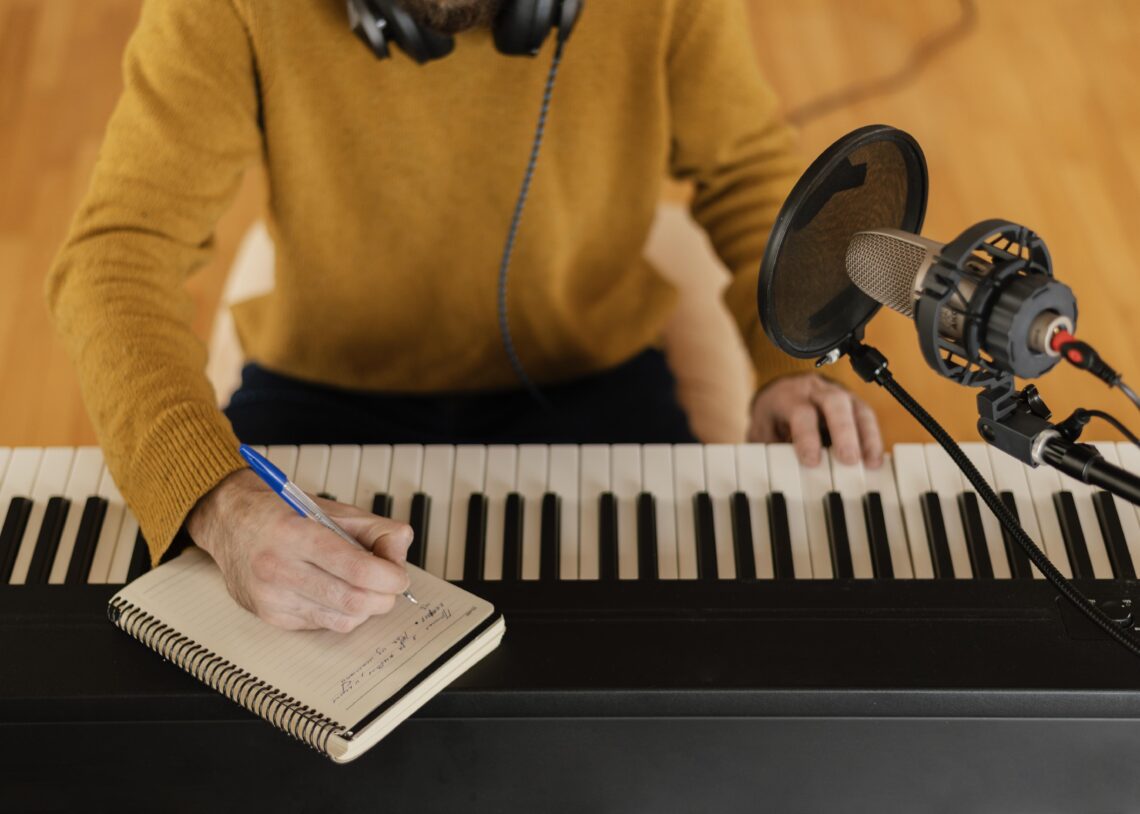
Why Finding Your Own Individual Sound Right From Day One Is Of The Utmost Importance
It isn’t a group of notes music is — your soul voice it is, and far more than words can tell of you. Right from the first touch of the instrument, vision of the primary goal must be lost: finding your own, personal sound. Your musical signature it will be, one that sets you apart from thousands of other players. In this first step, instrument guidance; interactive assessments; instrument choice; novice strengths; guided demos inside our discover the ultimate music learning app act as a discovery tool and first-instrument guide for confidence building.
Why, therefore, so vital at the start of the journey? Consider choosing a instrument based on trend or what others believe. The lack of harmony between inner you and sound made by you will definitely be felt in time. Repulsive and stifling development such a discord is. The perfect option, however, will:
- · Get you immediately in synch with your mood and style;
· Facilitate faster learning of styles closer to your personality;
· Build a solid musical foundation to keep adding to.
Beginning with learning your own voice is to establish the groundwork on which the remainder of your life as a musician will be built.
How Our Service Decides Musical Preferences And Style
Since instrument choice is a multi-faceted and complex process, we offer you a resource for in-depth self-discovery as a musician. Our system questions your musical interests and preferences through interactive exercises and response analysis. Step by step on how it works is:
- Genre sensitivity test — short audio clips of various genres — from classical to fusion — are presented to you.
- Strong reaction detection — automatically, you mark down the rhythms and noises that elicit a strong response.
- Rhythm inquiry and motor skills — mini-games test you on how close you are to particular collections of rhythm.
- Profile of musical preference construction — data are analyzed by the system, mapping your own unique aims and inclinations.
What results is not simply a list of recommended instruments, but an understanding of your own musical language and the way it can be expressed. Avoiding superficial or random choices and starting your path with the most accurate hitting of the target this allows. (Adds interactive assessments, aptitude test, preference analysis, assessment metrics, and decision support.)
| Steps of analysis | Purpose | Your result |
| Genre testing | Identifying favorite styles | Your top 3 genres |
| Emotional response | Understanding what moves the heart | List of energies and moods |
| Rhythmic abilities | Achieving easy tempo | Level of competence in rhythm |
And there you have it — not only a friendly list, but also a guide that will help you choose an instrument well and with confidence. (Choice recommendation via instrument profiling, sound sampling, and guided exploration.)
Major Categories Of Instruments — Choosing By Character And Goals
In choosing the first instrument, part of the fundamentals is discovering your own personality and goals in music. Divided into a set of major categories, instruments can be, each having its own traits and best for a range of personality types and creative endeavors:
- String instruments (guitar, violin, cello, bass guitar). They will be suitable for people attracted to earthy sound and melodiousness. Strings will be an excellent choice if your sound is expressive play, emotional. In addition, patience and orderliness are normally required of them, which again develops perseverance and sense of details.
- Keyboard instruments (piano, synthesizers). For people who like music with intricate harmony and sound experiments, keyboards are the best. With all those possibilities in hand and being a great starting point for learning music theory, keyboards do. If your aim is arranging or producing electronic music, especially on them you should listen.
- Wind instruments (trumpet, flute, saxophone). For active, extrovert performers the choice is. Breath control techniques are needed when playing wind instruments, coordinated too. For people who would like to play in a band or jazz ensemble, such suggestion will be appropriate.
- Percussive instruments (drums, percussion). Suitable for people with a strong sense of rhythm and active energetic percussion instruments are. Dynamics they convey and bring out so well the rhythmic quality of music.
In choosing an instrument, making it solely dependent on your personality, mood, and ultimate objectives is important — be it you want to play solo, make electronic music, play with a band, or play just for fun. Making these inclinations a priority to render the choice more intentional, Talented makes things easy. (Adds selection insights and interactive demos for novice orientation.)
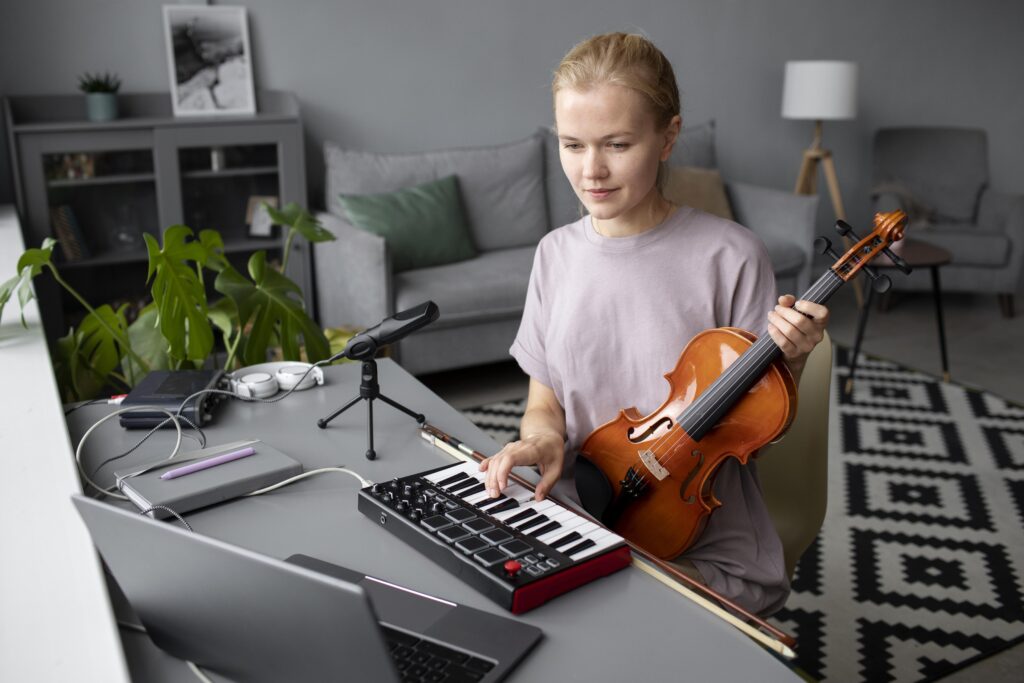
Simple Tips For Trying Out Instruments On Talented
To be sure if an instrument is suitable for you, the best is to try it out during rehearsal. Here is the recipe for proper testing with Talented:
- Select a variety of instruments from categories, according to platform recommendations and personal interest. Don’t stop at one; open the experimentation ground.
- Listen to the sound of each instrument in the app or on Talented’s website. Do not just remember how beautiful the sound is, but also try to picture the emotional impact it makes.
- Preference and reaction tests — interactive exercises offered by Talented determine the most appropriate playing style and type of sound for you.
- Provide time for direct experience of the instrument itself. Whenever possible, visit music shops, studios, or masterclasses. Note while experimenting with the instrument:
- · Playability and handling ease
· Ease in learning elementary techniques
· Familiarity with the instrument within minutes
- · Playability and handling ease
- Note your impressions and which instruments you were most interested in and why. This is facilitated for analysis later, Talented allows.
- Don’t rush a decision, just take your time. Intuitive instinct and first impression are generally best guide.
Rather than a technical test, the test is a thrilling immersion in the world of sound, each instrument bringing out a facet of your personality. With Talented, this experience is now conscious and motivational. (Guided demos, demo sessions, and interactive assessments help confidence building.)
Results Analysis And Recommendations — Selecting Your First Instrument Wisely
There is a vital step once you’ve experimented with various instruments using Talented — analysis of the results achieved. It is during this step where one can make an informed decision and not commit any mistakes with the first instrument, which will be your music companion for all your musical activities.
What Needs To Be Analyzed While Reviewing The Results?
- Musical taste and style fit.
How well the instrument you’ve played sounds to the genres and styles in your surroundings, double check. Visualizing this information with Talented gives you an advantage by showing you which instrument is most suited to your personality. - Comfort and interest level.
Pay attention to how you feel playing each instrument that you’ve tried. To bring enjoyment and not exasperation — the process must; thus ensuring long-term interest and drive. - Scope for development.
The extent to which the instrument selected can provide scope for development, check. Beginning with something bound to become stale or too taxing to the initial stages, it’s no use. - Practical availability.
Think of cost and availability of instrument in your area. Talented not only takes into account your preferences but also offers the best both in quality and price. - Talented’s advice and suggestions.
Utilize the advice provided by the website. After your responses, tests, and experience of other visitors who have the same tastes, they are created.
In order to simplify the decision-making process, the following plan can be utilized:
- Step 1: Compare Talented test scores, underscore 2-3 instruments that gained the highest score.
- Step 2: Evaluate your emotions when playing each of them, remember which tone best suits your personality.
- Step 3: Research how difficult it will be to start learning on the chosen instrument — consult professional advice if required.
- Step 4: Think about cost capacity and availability of the instrument in your town.
- Step 5: Come to a final decision, by blending factual knowledge and personal intuition.
Choosing the very first instrument is no simple decision. But with Talented, result analysis is clear, open, and fair. Not to purchase a music instrument, thus you can start to create your own sound — the very one that will inspire and guide you for years to come. Don’t forget that a deliberate decision is the best beginning for any musician. (Decision support from assessment metrics and choice recommendation.)
Practical Steps Toward Your Own Sound
To discover your own voice and command the instrument of preference — takes order and discipline this procedure does. From step one to playing with confidence — a great distance it is, and as mobile app developers, we are aware of this; with tips that are useful to provide, we wish to make this adventure more thoughtful and inspiring.
In Music Immersion — Listen, Analyze, Get Inspired
And with the ear and the sense of hearing, everything begins. Don’t remain within your instrument — follow various styles and genres, pay attention to sound nuances, and performance manner. Inspirational melodies and ideas — jots them down. Your “musical diary” will show you what sound colors you want to incarnate.
Practice With A Purpose, Not For The Sake Of Time
Not only the number of hours but practice quality — is the ground for progress. Some goals set: today practice dynamics, tomorrow — rhythmic precision or expressiveness. Exercises vary, articulation and effects experiment. Such method not only forms technical proficiency but individuality of sound as well.
Record And Analyze Your Performance
Playing is not enough, you have to listen to yourself from outside, from our rehearsal. Record your efforts with a smartphone or any other mobile device and listen and note down. What palettes of sounds did you use? What do you need to improve on? This type of self-control conditions thinking and makes you improve faster. (Use interactive demos and sound sampling for selection insights.)
Feedback And Experience Exchange
Participate in master classes if possible, seek mentors, communicate with other musicians. Irreplaceable are tips from the outside, often opening new horizons in technique and style. Don’t be afraid to share your ideas and ask for opinions — part of the path to your own sound this is.
Experiments And Courage In Searching
Don’t stick with one sound, try out different ways, styles, even instruments to get new colors of your musical personality. The outside-the-box solution is often a bright, fresh sound.
Remembering those steps, not just you develop technique, but also your musical handwriting — and that’s priceless. In our app, assisting you especially at those moments we strive: from self-discovery to engagement in the creation process. May each practice day bring you one step nearer the sound that will speak about you without words. (Instrument guidance with guided exploration and novice orientation.)
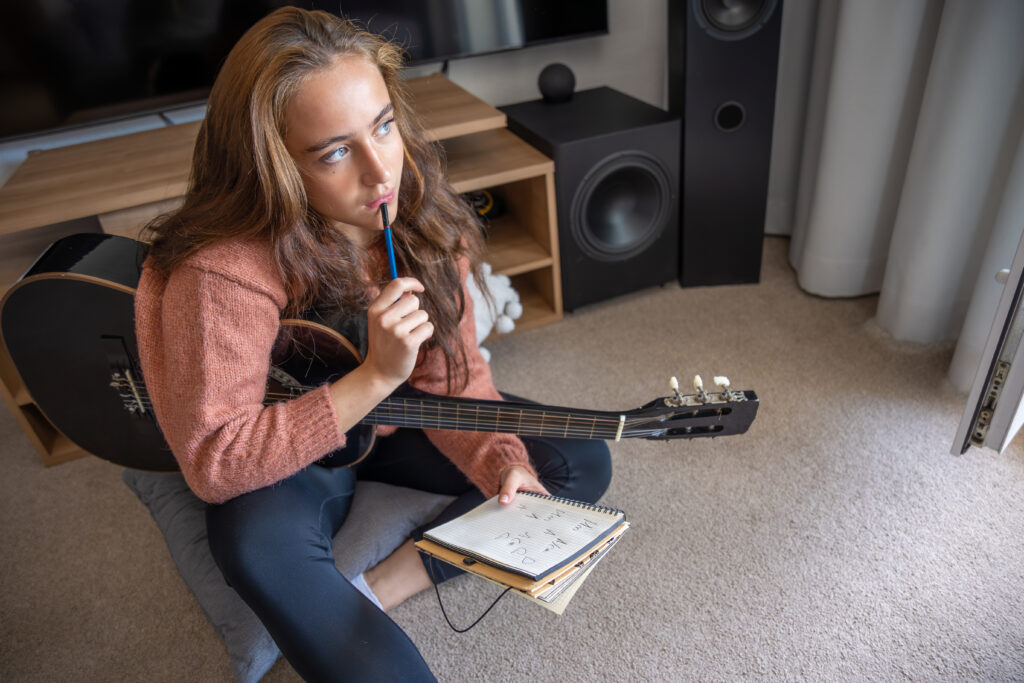
Common First Instrument Choice Pitfalls And How To Avoid Them
First musical instrument choice is a delicate and risky process in which it is easy to get it wrong — deterrent to years of interest in music. The most common ones are the following:
- Trends or friends to follow. Choosing an instrument just because “it’s in style now” or “all my friends play guitars” — disappointment is the path. Your interests are what the sound must be in tune with.
- Too little testing. One or two tryout sessions many are limited to, with it being difficult to gain true comfort and compatibility with the instrument.
- Ignoring physical comfort. Regardless of how fine the sound of the instrument is, if playing it causes discomfort, slow and painful progress will be.
- Lacking a development strategy. The choice is made, yet without concrete notions of what to accomplish and how to progress, easy to lose motivation it is.
To Avoid These Mistakes, Heed Some Advice
- Allow yourself to explore as broadly as possible among sounds and sensations. Structuring this search Gifted will help.
- Try different styles and genres: sometimes a new instrument your potential reveals.
- Listen not only to advice of others but to inner feelings — to your own sound exactly they will lead.
- Draw up a learning plan and start practicing immediately not to lose the moment of inspiration.
Conclusion — How Talented Becomes Your Friend On The Musical Journey
Easy to get lost looking for the very first instrument it is, but interesting and clear this journey becomes with Talented. Not just helping to select an instrument, the site offers a complete ecosystem for revealing your unique musical voice.
Why is Talented your best friend?
- Personalization — based on your aspirations and preferences every test, quiz, and recommendation is.
- Interactivity — being able to directly audition the sound and practice in choice — a most useful feature not found in most of the third-party services.
- Comprehensiveness of approach — instruments, styles, techniques — all is combined within one system for your improvement.
Not just notes and chords memorization the musical path is, but gradual development of your own sound reflecting your personality. And along the way Talented doesn’t just behave like an assistant but like a mentor, making you move with confidence, awareness, and happiness. Starting from the right instrument and onwards development of your skill, a musical language you will possess that expresses exactly from your heart. (Interactive assessments and instrument guidance close the loop from first-instrument guide to ongoing instrument choice refinement.)